
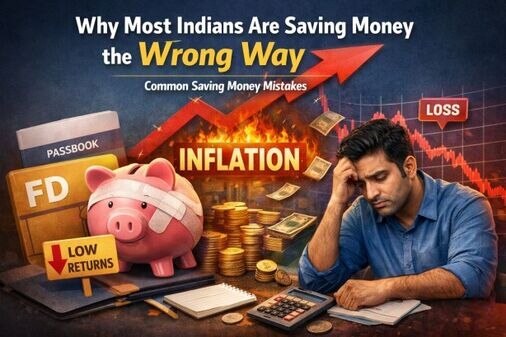
Saving money is deeply rooted in Indian culture. From childhood, we are taught to “save for the future,” whether it’s for education, marriage, emergencies, or retirement. However, despite good intentions, most Indians end up making critical saving money mistakes that limit wealth creation and financial security.
In today’s fast-changing economy, traditional saving habits are no longer enough. Inflation, rising lifestyle costs, and changing job markets demand smarter financial planning. Let’s understand why most Indians are saving money the wrong way, the common saving money mistakes they make, and how to fix them.
1. Confusing Saving With Investing
One of the biggest saving money mistakes Indians make is assuming that saving and investing are the same.
Many people believe that parking money in:
-
Savings accounts
-
Fixed deposits (FDs)
-
Recurring deposits (RDs)
is enough to grow wealth. In reality, these instruments mostly protect money, not grow it.
Why This Is a Problem
-
Average savings account interest: 3–4%
-
Inflation rate in India: 5–7%
This means your money is losing purchasing power every year.
The Right Approach
Saving should be for short-term needs and emergencies. For long-term goals like retirement or wealth creation, investing in assets like mutual funds, stocks, or index funds is essential.
2. Keeping Too Much Cash Idle
Another common saving money mistake is holding excessive cash in bank accounts.
Many Indians feel emotionally secure seeing a large balance in their savings account. While liquidity is important, too much idle cash is financially inefficient.
What Goes Wrong
-
Money earns very low returns
-
Missed opportunity for compounding
-
Inflation silently eats value
Smart Alternative
-
Keep 6 months of expenses as an emergency fund
-
Invest surplus money in low-risk or moderate-risk instruments based on goals
3. Relying Only on Fixed Deposits
Fixed deposits are considered the safest saving option in India. While safety is important, over-dependence on FDs is a major saving money mistake.
Why FDs Are Not Enough
-
Returns barely beat inflation
-
Tax on FD interest reduces net returns
-
Not ideal for long-term goals like retirement
Better Strategy
FDs should be used for:
-
Short-term goals
-
Capital protection
For long-term goals, consider:
-
Equity mutual funds
-
Index funds
-
Hybrid funds
4. Ignoring Inflation While Saving
Most Indians plan their savings without factoring in inflation, which is one of the most dangerous saving money mistakes.
Example
If your goal is ₹50 lakh after 20 years, inflation can push the required amount to ₹1 crore or more.
What Happens When Inflation Is Ignored
-
Retirement corpus falls short
-
Children’s education becomes unaffordable
-
Savings feel “not enough” despite discipline
Solution
Always calculate goals in future value terms and choose investments that beat inflation.
5. Saving Without Clear Financial Goals
Saving without purpose is another reason why most Indians struggle financially.
Common Issues
-
Random saving with no direction
-
Mixing short-term and long-term money
-
Panic withdrawals during emergencies
Correct Method
Divide savings into clear goals:
-
Emergency fund
-
Short-term goals (travel, gadgets)
-
Medium-term goals (car, house down payment)
-
Long-term goals (retirement, children’s education)
Goal-based saving eliminates confusion and improves discipline.
6. Avoiding Equity Due to Fear
Fear of stock market losses leads many Indians to avoid equity altogether. This fear results in one of the biggest saving money mistakes—missing long-term growth.
Reality Check
-
Markets fluctuate in the short term
-
Over the long term, equity has historically delivered better returns than traditional savings
Smarter Way
-
Invest via SIPs (Systematic Investment Plans)
-
Stay invested for long periods
-
Avoid emotional decisions during market volatility
7. Delaying Savings and Investments
“Kal se start karenge” is a common mindset. Delaying savings is a silent but costly saving money mistake.
Why Delay Is Dangerous
-
Compounding needs time
-
Starting late requires higher monthly investments
-
Retirement planning becomes stressful
Read For More Blog – best money habits to build wealth
Best Practice
Start early, even with small amounts. Time matters more than the amount invested.
8. Not Reviewing Savings Regularly
Many Indians start saving but never review or adjust their strategy.
Problems This Creates
-
Goals change, but savings don’t
-
Income increases, savings remain same
-
Poor performing investments stay untouched
Fix This Mistake
Review your savings and investments:
-
Once every 6–12 months
-
After major life events (job change, marriage, children)
9. Lack of Financial Education
Low financial literacy is the root cause behind many saving money mistakes in India.
People rely on:
-
Relatives’ advice
-
Outdated traditional methods
-
Unverified online tips
How to Improve
-
Learn basic personal finance
-
Understand risk and return
-
Seek certified financial advice if needed
Conclusion
Saving money is important, but saving money the right way is even more important. Most Indians save diligently but fail to grow wealth due to common saving money mistakes like ignoring inflation, avoiding equity, relying too much on fixed deposits, and lacking clear financial goals.
By correcting these habits and adopting a smarter, goal-oriented approach, anyone can build long-term financial security and wealth. Remember, it’s not about how much you save, but how well you save.
Frequently Asked Questions (FAQs)
1. What are the most common saving money mistakes in India?
The most common saving money mistakes include relying only on fixed deposits, ignoring inflation, avoiding equity investments, and keeping too much idle cash.
2. Is saving in a bank account enough for financial security?
No, bank accounts are good for emergencies but not enough for long-term wealth creation due to low interest rates and inflation.
3. Why is inflation important while saving money?
Inflation reduces the purchasing power of money. Ignoring it can make your savings insufficient for future goals.
4. Are fixed deposits a bad saving option?
Fixed deposits are safe but not ideal for long-term goals. They should be balanced with growth-oriented investments.
5. How can beginners avoid saving money mistakes?
Beginners should start early, set clear financial goals, diversify investments, and continuously improve financial knowledge.
6. What is the best way to save money in India?
The best approach is a mix of emergency savings, goal-based investments, and long-term wealth creation through diversified assets.