
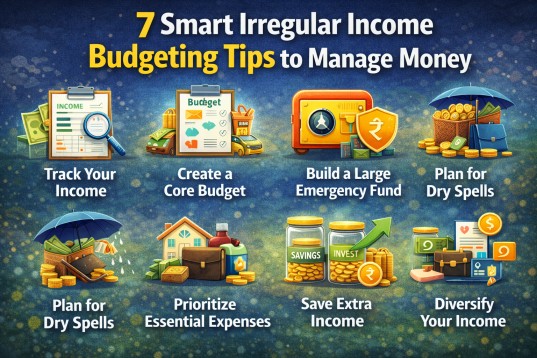
Managing money becomes challenging when your income changes every month. Freelancers, business owners, gig workers, and commission-based employees often face this problem. Unlike fixed salaries, irregular income makes it difficult to plan expenses, savings, and investments.
However, with the right approach, irregular income budgeting can become much easier and more effective. By following smart financial strategies, you can manage expenses, build savings, and maintain financial stability even when your income fluctuates.
This guide explains practical steps to create a strong budgeting system for irregular income.
Why Budgeting Is Important for Irregular Income
People with unpredictable earnings often struggle with financial stress because they don’t know how much they will earn next month.
Without proper irregular income budgeting, common problems include:
-
Overspending during high-income months
-
Running out of money during slow months
-
Difficulty paying bills on time
-
Lack of savings or emergency funds
A well-planned budgeting strategy helps create stability and reduces financial uncertainty.
Step 1: Calculate Your Average Monthly Income
The first step in irregular income budgeting is understanding your average earnings.
Look at your income from the last 6–12 months and calculate the average.
Example:
If your income for the last 6 months was:
₹35,000
₹50,000
₹40,000
₹30,000
₹55,000
₹45,000
Average monthly income = ₹42,500
Using the average income helps create a realistic budget.
Step 2: Base Your Budget on the Lowest Income Month
A smart strategy is to plan your budget around the lowest earning month.
If your lowest monthly income is ₹30,000, build your budget using that number.
This ensures that:
-
Essential bills are always covered
-
Financial stress during low-income months is reduced
-
Extra income months become an opportunity to save more
This approach makes irregular income budgeting much safer.
Step 3: Separate Essential and Non-Essential Expenses
Divide your spending into two main categories.
Essential Expenses
These are necessary costs you must pay every month.
Examples:
-
Rent or home loan EMI
-
Groceries
-
Electricity and utilities
-
Transportation
-
Insurance
Non-Essential Expenses
These expenses are optional.
Examples:
-
Dining out
-
Shopping
-
Entertainment
-
Subscriptions
During low-income months, focus only on essential expenses.
Step 4: Create a Financial Buffer
A financial buffer acts like a personal safety net.
Try to keep 2–3 months of essential expenses saved in your bank account.
This buffer allows you to:
-
Pay bills during slow months
-
Avoid borrowing money
-
Reduce financial stress
A strong buffer is a critical part of successful irregular income budgeting.
Step 5: Save More During High-Income Months
When income increases, many people increase their spending. Instead, use high-income months to strengthen your financial position.
Extra income can be used for:
-
Emergency savings
-
Debt repayment
-
Investments
-
Future expenses
Saving aggressively during good months ensures stability during slower periods.
Step 6: Use Separate Bank Accounts
A simple trick that improves irregular income budgeting is separating accounts.
You can create three accounts:
-
Income Account – where payments are received
-
Expense Account – used for monthly bills
-
Savings Account – used for emergency funds and investments
This structure makes it easier to control spending and track finances.
Step 7: Automate Savings and Investments
Automation can help maintain financial discipline.
You can automate:
-
Monthly SIP investments
-
Recurring deposits
-
Transfers to savings accounts
Automation ensures that savings continue even when income varies.
Step 8: Track Your Cash Flow Regularly
Tracking your money flow is essential for irregular income budgeting.
Review your finances every month and check:
-
Total income earned
-
Total expenses
-
Amount saved or invested
Regular tracking helps identify spending problems early.
Step 9: Avoid Lifestyle Inflation
When freelancers or business owners experience a good income month, they often increase spending.
This can create problems later when income drops.
Instead of upgrading lifestyle quickly, use higher earnings to:
-
Build financial reserves
-
Increase investments
-
Reduce debts
Maintaining a balanced lifestyle helps stabilize finances.
Step 10: Set Realistic Financial Goals
Clear financial goals help maintain discipline even with irregular income.
Examples include:
-
Building a 6-month emergency fund
-
Saving for a house down payment
-
Investing for retirement
-
Paying off debt
Goals provide motivation and direction for your budgeting strategy.
Benefits of Proper Irregular Income Budgeting
Following a structured budgeting system can provide several benefits:
-
Better financial control
-
Reduced stress during slow income months
-
Strong emergency savings
-
Improved spending discipline
-
Long-term financial stability
With consistent planning, even unpredictable income can support a secure financial future.
Conclusion
Managing money with variable income can feel challenging, but it is completely possible with the right approach. By calculating average income, controlling expenses, building financial buffers, and saving during high-income months, anyone can master irregular income budgeting.
The key is discipline and consistency. Small financial improvements made today can lead to strong financial security in the future.
FAQs: irregular income budgeting
1. What is irregular income budgeting?
Irregular income budgeting is a financial strategy designed for people whose income changes every month, such as freelancers, gig workers, and business owners.
2. How do you budget with fluctuating income?
You can budget by calculating your average income, planning expenses based on the lowest income month, and building an emergency buffer.
3. How much emergency savings should people with irregular income have?
Experts recommend saving at least 3–6 months of essential expenses to handle income fluctuations.
4. Why is budgeting harder with irregular income?
Budgeting becomes harder because income varies each month, making it difficult to plan expenses and savings consistently.
5. What is the best budgeting method for freelancers?
Freelancers should track income regularly, separate accounts for expenses and savings, and create a financial buffer.