
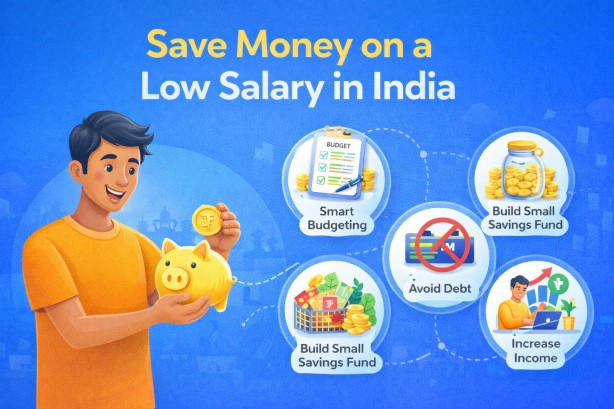
Saving money on a low salary in India can feel impossible. Rising rent, food prices, EMIs, and daily expenses often leave little room to breathe—let alone save. But here’s the truth: you don’t need a high income to build savings; you need the right system.
Many Indians earning ₹15,000–₹30,000 per month still manage to save consistently by making smart, practical changes. In this guide, you’ll learn realistic and proven ways to how to save money on a low salary in India, without extreme sacrifice or financial stress.
Why Saving Feels Hard on a Low Salary
Before fixing the problem, let’s understand it.
Most low-salary earners struggle because of:
-
No clear monthly budget
-
High fixed expenses (rent, transport, food)
-
Impulse spending
-
No emergency fund
-
Dependence on credit cards or small loans
The goal isn’t to stop enjoying life—it’s to control money instead of letting money control you.
1. Track Every Rupee You Spend (Non-Negotiable)
If you don’t know where your money goes, you can’t save it.
What to do:
-
Track expenses for 30 days
-
Categorize spending: food, rent, travel, mobile, entertainment
-
Use a simple app or Google Sheet
Most people find ₹2,000–₹4,000 of unnecessary spending just by tracking.
👉 Expense tracking is the first step to save money on a low salary.
2. Create a Simple Budget That Fits a Low Salary
Forget complicated budgeting rules. Keep it practical.
Low-Salary Budget Rule:
-
50–55% → Essentials (rent, food, transport)
-
25–30% → Savings + debt repayment
-
15–20% → Wants
If your income is ₹20,000:
-
Try saving at least ₹3,000–₹4,000 monthly
-
Even ₹1,000 saved is a win—consistency matters more than amount
3. Pay Yourself First (Even ₹500 Counts)
Most people save what’s left. That rarely works.
Better approach:
-
As soon as salary comes → transfer savings first
-
Start with ₹500–₹1,000
-
Increase slowly when income grows
This habit alone can completely change how you save money on a low salary.
4. Cut Expenses Without Cutting Your Lifestyle
Saving doesn’t mean suffering.
Smart expense cuts:
-
Switch to prepaid or cheaper mobile plans
-
Cancel unused OTT subscriptions
-
Cook more meals at home (biggest saver)
-
Use public transport or carpool
Small changes can save ₹2,000–₹5,000 per month easily.
5. Avoid EMIs and Buy-With-Loan Traps
Low salary + EMIs = financial stress.
Avoid:
-
Phone EMIs
-
Buy Now Pay Later apps
-
Credit card minimum payments
If you already have loans:
-
Close the smallest one first
-
Avoid taking new debt
Debt-free people save money faster—even on low salaries.
6. Build an Emergency Fund Slowly
An emergency fund protects your savings.
Target:
-
Start with ₹10,000
-
Then grow to 3–6 months of expenses
Keep this money in:
-
Savings account
-
Liquid mutual fund
Emergency funds stop you from borrowing during crises.
7. Increase Income Without Quitting Your Job
Saving alone isn’t enough—earning more helps.
Easy side income ideas:
-
Freelancing (writing, design, SEO)
-
Tuition or online teaching
-
Weekend delivery or gig work
-
Selling skills on Fiverr or Upwork
Even ₹3,000–₹5,000 extra income can double your savings power.
8. Use Government Schemes to Your Advantage
India has many low-risk savings options.
Best options for low-salaried earners:
-
PPF – long-term, tax-free
-
RD (Recurring Deposit) – disciplined saving
-
Sukanya Samriddhi Yojana – if applicable
-
Atal Pension Yojana – retirement support
These schemes help you save money on a low salary safely.
Read for more blog – Salary Planning Tips to Save More Every Month
9. Automate Savings to Stay Consistent
Automation removes excuses.
How to automate:
-
Set auto-transfer on salary day
-
Start SIP or RD with minimum amount
-
Don’t touch savings unless necessary
Consistency beats motivation every time.
10. Change Your Money Mindset
Your mindset decides your results.
Replace:
-
“I earn too little to save.”
-
“I’ll save after salary increases.”
With:
-
“I can save something every month.”
-
“My habits matter more than income.”
Many wealthy people started saving when their income was low.
Final Thoughts
If you’re wondering how to save money on a low salary in India, remember this:
You don’t need perfection.
You need discipline, awareness, and small, consistent actions.
Start with tracking expenses, saving a small amount, avoiding debt, and slowly increasing income. Over time, these habits will compound into financial stability and confidence.
FAQs: Save money on a low salary in India
1. Can I really save money on a low salary in India?
Yes. Even ₹500–₹1,000 saved monthly builds discipline and financial security over time.
2. What is the best saving plan for low salary earners?
Recurring deposits, PPF, and emergency funds are ideal for low-income earners in India.
3. How much should I save if my salary is ₹20,000?
Aim to save at least 15–20% of your income, starting small and increasing gradually.
4. Is it better to save or invest on a low salary?
First, build an emergency fund, then start small investments like SIPs or PPF.
5. How do I stop overspending on a low income?
Track expenses, avoid EMIs, set spending limits, and automate savings.
6. What mistakes stop people from saving on low salaries?
Lack of budgeting, impulse buying, dependence on debt, and no financial planning.