
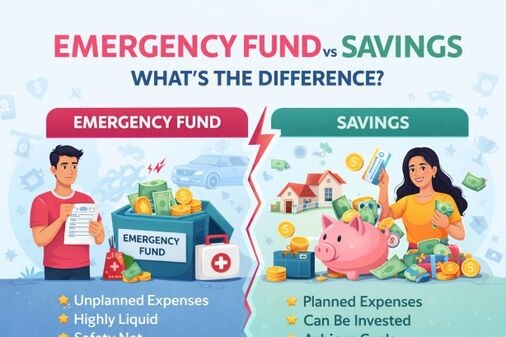
Many people use the terms emergency fund and savings interchangeably, but they serve very different purposes. Understanding emergency fund vs savings is essential for smart financial planning, especially in today’s uncertain economic environment.
If you are earning, saving money, or planning your financial future, knowing the difference between emergency fund vs savings can protect you from financial stress and debt.
What Is an Emergency Fund?
An emergency fund is money kept aside specifically for unexpected situations. In the emergency fund vs savings comparison, an emergency fund is meant only for emergencies—not planned expenses.
Common emergencies include:
-
Medical emergencies
-
Job loss or salary delay
-
Urgent home or vehicle repairs
-
Family emergencies
An emergency fund ensures you don’t rely on credit cards or loans during difficult times.
What Are Savings?
Savings are money set aside for planned or future expenses. When comparing emergency fund vs savings, savings are more flexible and goal-oriented.
Savings are usually used for:
-
Vacations
-
Buying gadgets
-
Weddings or festivals
-
Down payment for a house or car
-
Short-term financial goals
Unlike an emergency fund, savings can be spent without guilt on planned needs.
Emergency Fund vs Savings: Key Differences
Understanding the core difference between emergency fund vs savings helps in better money management.
| Emergency Fund | Savings |
|---|---|
| Used only for emergencies | Used for planned expenses |
| Highly liquid | Can be liquid or semi-liquid |
| Should not be touched regularly | Can be used anytime |
| Focuses on financial security | Focuses on lifestyle & goals |
Both are important, but their purpose is very different.
How Much Emergency Fund Should You Have?
Financial experts recommend keeping 3 to 6 months of expenses as an emergency fund. In the emergency fund vs savings discussion, this fund acts as your financial safety net.
For example, if your monthly expenses are ₹30,000, your emergency fund should be between ₹90,000 and ₹1,80,000.
This amount depends on:
-
Job stability
-
Number of dependents
-
Health conditions
-
Income sources
Where Should You Keep Your Emergency Fund?
In emergency fund vs savings, liquidity is key for emergency funds. Ideal options include:
-
Savings account
-
Liquid mutual funds
-
Short-term fixed deposits
Avoid investing emergency funds in stocks or long-term instruments where money is locked in.
Where Should You Keep Your Savings?
Savings can be invested based on time horizon and risk appetite. Compared to emergency funds, savings allow more flexibility.
Common saving options include:
-
Fixed deposits
-
Recurring deposits
-
Mutual funds
-
Gold investments
Savings can help grow wealth when invested wisely.
Read for more blog – Saving money on a low salary in India
Why You Need Both Emergency Fund and Savings
Choosing between emergency fund vs savings is not correct—you need both. An emergency fund protects you during crises, while savings help you enjoy life and achieve goals.
Without an emergency fund:
-
You may fall into debt
-
Savings may get wiped out
-
Financial stress increases
A balanced approach ensures financial stability and peace of mind.
Common Mistakes People Make
-
Using savings as an emergency fund
-
Not creating an emergency fund at all
-
Investing emergency money in risky assets
-
Spending emergency funds on lifestyle expenses
Avoiding these mistakes strengthens your financial foundation.
FAQ
1. Is emergency fund different from savings?
Yes, emergency fund vs savings differ in purpose. Emergency funds are for unexpected expenses, while savings are for planned goals.
2. Can I use savings instead of an emergency fund?
Using savings for emergencies can disrupt financial goals. It’s better to maintain a separate emergency fund.
3. How fast should I build an emergency fund?
You should aim to build it within 6–12 months by saving a fixed portion of your income.
4. Should emergency funds be invested?
Emergency funds should be kept in safe and liquid options, not high-risk investments.
5. Can I have multiple savings goals?
Yes, savings can be divided into multiple goals like travel, education, or big purchases.
6. Which is more important: emergency fund vs savings?
Both are important, but an emergency fund should be created before aggressive savings or investments.