
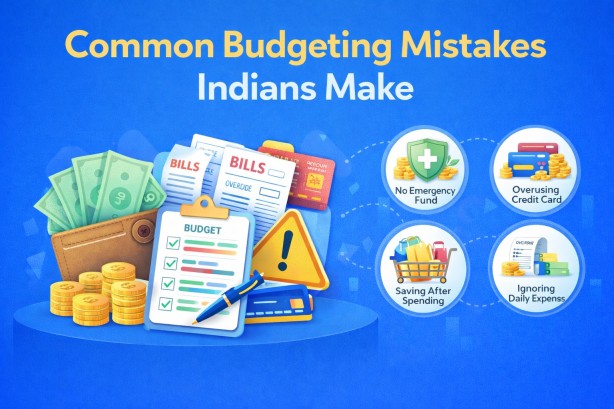
Managing money sounds simple—earn, spend, save. Yet, despite rising incomes, many Indians struggle with savings and financial stability. The main reason isn’t low income; it’s budgeting mistakes that quietly drain money every month.
If you’ve ever wondered why your salary disappears so fast, this guide will help. Let’s break down the most common budgeting mistakes Indians make and practical ways to fix them—without making your life boring.
Why Budgeting Fails for Most Indians
Budgeting fails not because people don’t want to save, but because:
-
Expenses are underestimated
-
Savings are treated as optional
-
Lifestyle inflation creeps in silently
Understanding these mistakes is the first step to building a budget that actually works.
1. Not Tracking Daily Expenses
One of the biggest budgeting mistakes is not knowing where the money goes.
Small expenses like:
-
Online food orders
-
Auto/cab rides
-
OTT subscriptions
-
Impulse shopping
seem harmless individually but add up massively.
How to fix it:
-
Use expense tracking apps
-
Track expenses for at least 30 days
-
Categorize spending (needs vs wants)
👉 Awareness alone can reduce spending by 15–20%.
2. Saving After Spending (Instead of Before)
Most Indians follow this pattern:
“Let me spend first, then save what’s left.”
Unfortunately, nothing is usually left.
Why this is a mistake:
-
Savings become inconsistent
-
Emergency funds never get built
-
Financial stress increases
Smart alternative:
-
Follow “Pay Yourself First”
-
Automate SIPs and savings transfers
-
Save at least 20% of income before spending
3. Ignoring Emergency Fund Planning
Many people rely on:
-
Credit cards
-
Personal loans
-
Borrowing from friends
during emergencies. This is a dangerous budgeting mistake.
Ideal emergency fund in India:
-
3–6 months of essential expenses
-
Kept in savings account or liquid funds
Without this, even a small medical or job-related issue can destroy your budget.
4. Unrealistic Budgeting
Creating a budget that looks good on paper but is impossible to follow is very common.
Examples:
-
Zero eating out
-
No entertainment at all
-
No buffer for festivals or travel
Read For More Blog – Salary Planning Tips
Result:
-
Budget breaks within days
-
People stop budgeting altogether
Solution:
-
Keep a realistic “fun money” category
-
Budget for Indian realities (weddings, festivals, gifts)
-
Leave a buffer of 5–10%
5. Lifestyle Inflation After Salary Hikes
This is one of the most dangerous budgeting mistakes.
As income increases:
-
Expenses increase faster
-
EMIs grow
-
Savings remain the same
Smart rule:
For every salary hike:
-
Save at least 50% of the increment
-
Upgrade lifestyle slowly, not instantly
This single habit can create massive wealth over time.
6. Overusing Credit Cards Without a Plan
Credit cards are useful—but only with discipline.
Common mistakes:
-
Paying minimum due only
-
Using cards for lifestyle upgrades
-
Treating credit limit as extra income
How this hurts budgeting:
-
Interest eats savings
-
Monthly budget collapses
-
Credit score drops
Fix:
-
Use credit cards only for planned expenses
-
Always pay full bill
-
Keep utilization below 30%
7. Not Adjusting Budget Regularly
Life changes—but many budgets don’t.
Changes like:
-
Rent increase
-
Marriage
-
Child expenses
-
Job switch
require budget updates.
Best practice:
-
Review budget every 3 months
-
Adjust categories as life changes
-
Increase savings percentage gradually
8. Depending Only on Fixed Deposits for Savings
FDs feel safe, but relying only on them is a long-term budgeting mistake.
Problem:
-
Returns often don’t beat inflation
-
Money loses purchasing power
Better approach:
-
Combine FDs with mutual funds
-
Use SIPs for long-term goals
-
Match investments with goals
9. No Clear Financial Goals
Budgeting without goals is like driving without a destination.
Without goals:
-
Budget feels restrictive
-
Motivation drops
-
Savings feel pointless
Fix:
Define clear goals:
-
Emergency fund
-
Home down payment
-
Child education
-
Retirement
Goals give purpose to your budget.
10. Copying Someone Else’s Budget
What works for your friend may not work for you.
Everyone has different:
-
Income levels
-
Family responsibilities
-
City living costs
Rule to remember:
Your budget should fit your life, not Instagram advice.
How to Build a Better Budget (Quick Checklist)
✔ Track expenses
✔ Save before spending
✔ Build emergency fund
✔ Use credit wisely
✔ Invest smartly
✔ Review budget regularly
Final Thoughts
Most financial problems don’t come from low income—they come from repeated budgeting mistakes. The good news? These mistakes are fixable.
For more practical finance guides, budgeting strategies, and money habits that actually work in India, keep learning with myfinancemoney.com.
FAQs: Budgeting Mistakes in India
1. What are the most common budgeting mistakes Indians make?
The most common budgeting mistakes include not tracking expenses, saving after spending, ignoring emergency funds, and lifestyle inflation.
2. How can I avoid budgeting mistakes with a low salary?
Even with a low salary, track expenses, automate savings, control lifestyle upgrades, and start small SIPs to avoid budgeting mistakes.
3. Is budgeting really necessary if income is fixed?
Yes. Budgeting is even more important with fixed income because it helps prioritize spending and avoid debt.
4. How often should I review my budget?
You should review your budget every 3 months or whenever there is a major life or income change.
5. Can budgeting help reduce financial stress?
Absolutely. A realistic budget improves control over money, builds savings, and reduces anxiety related to unexpected expenses.