
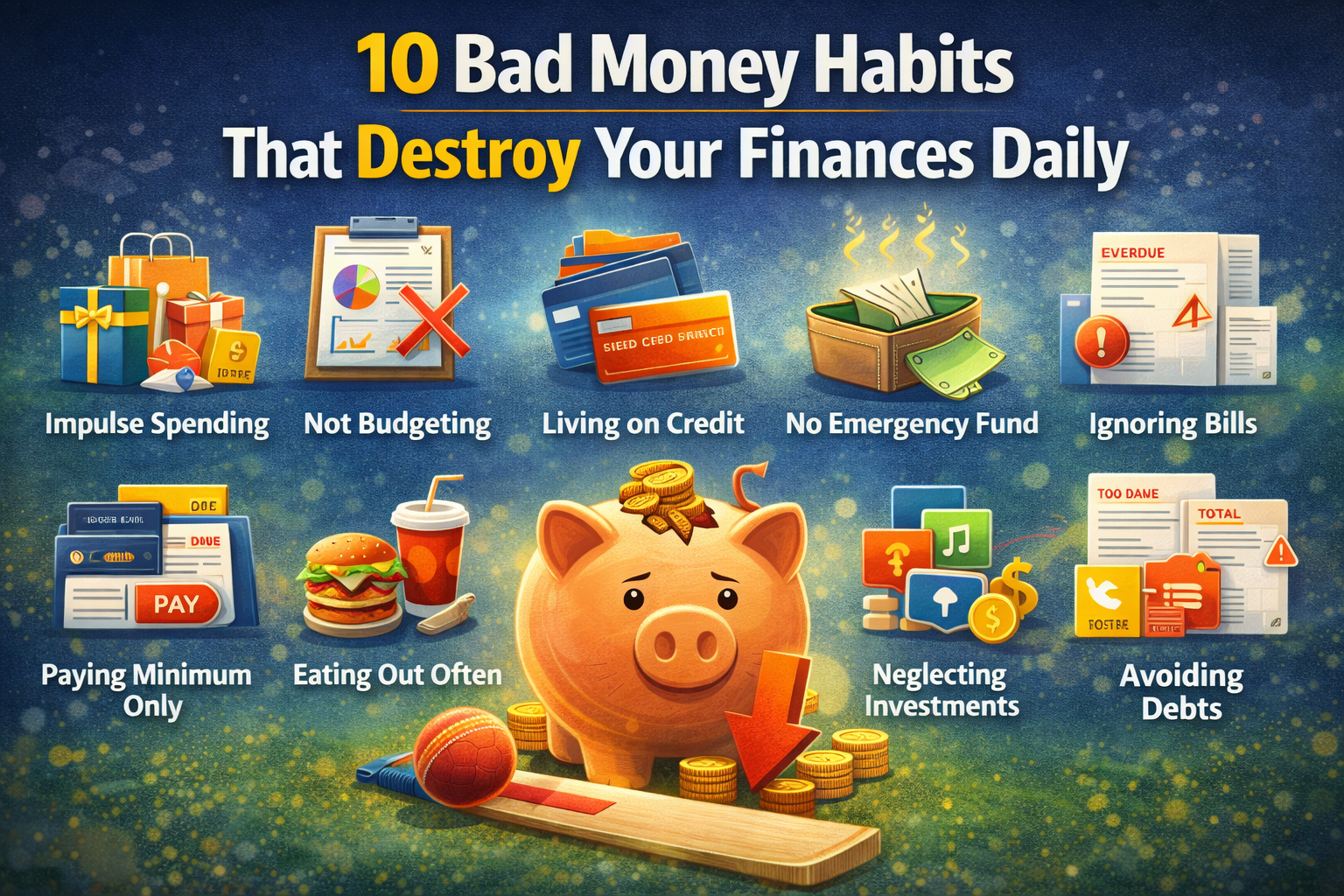
Many people struggle with saving money, even when they earn a decent income. The real problem is often not low income but bad money habits that slowly destroy financial stability over time.
Small daily spending decisions may seem harmless, but they can quietly drain your bank account and prevent you from building wealth. Understanding and fixing these habits is the first step toward financial freedom.
In this article, we will explore the most common bad money habits that damage your finances and how you can replace them with smarter financial behaviors.
Why Daily Money Habits Matter
Your financial future is built on everyday decisions. Spending ₹100–₹200 here and there may not feel significant, but over months and years, these expenses add up to thousands of rupees.
Consistently practicing good money habits can help you:
-
Save more money
-
Reduce financial stress
-
Build an emergency fund
-
Achieve long-term financial goals
However, continuing bad money habits can keep you stuck in a cycle of living paycheck to paycheck.
1. Spending Without Tracking Expenses
One of the biggest financial mistakes people make is not tracking their expenses.
If you don’t know where your money is going, you cannot control it.
Common problems include:
-
Overspending on food delivery
-
Frequent online shopping
-
Ignoring small daily purchases
Tracking your expenses using a budgeting app or simple spreadsheet can help identify bad money habits quickly.
2. Impulse Buying
Impulse purchases are one of the most damaging bad money habits.
Many people buy things they don’t actually need because of:
-
Online shopping offers
-
Flash sales
-
Social media influence
-
Emotional spending
Before making a purchase, ask yourself:
“Do I really need this?”
Waiting 24 hours before buying can prevent many unnecessary purchases.
3. Relying Too Much on Credit Cards
Credit cards can be useful, but misuse can create serious financial problems.
Bad habits include:
-
Paying only the minimum due
-
Using credit cards for everyday spending
-
Ignoring interest charges
High-interest debt is one of the fastest ways bad money habits can destroy your financial health.
Always try to pay the full credit card bill every month.
4. Ignoring Budget Planning
Without a proper budget, it becomes very easy to overspend.
A simple budgeting rule like the 50-30-20 rule can help manage finances:
-
50% for essential expenses
-
30% for lifestyle spending
-
20% for savings and investments
Ignoring budgeting is one of the most common bad money habits that prevent people from saving money.
5. Not Building an Emergency Fund
Unexpected expenses like medical bills, job loss, or home repairs can happen anytime.
Without emergency savings, people often rely on loans or credit cards.
Experts recommend saving at least 3 to 6 months of living expenses in an emergency fund.
Failing to prepare for emergencies is a dangerous bad money habit.
6. Lifestyle Inflation
When income increases, many people increase their spending instead of saving more.
Examples include:
-
Upgrading gadgets frequently
-
Moving to expensive housing
-
Dining out more often
-
Buying luxury items
This habit prevents long-term wealth creation and keeps people financially dependent on their salary.
7. Delaying Investments
Many people postpone investing because they believe they need a large amount of money to start.
This is not true.
You can start investing with small amounts through:
-
SIP in mutual funds
-
Recurring deposits
-
Index funds
Delaying investments is a silent bad money habit because it reduces the power of compound growth.
8. Not Setting Financial Goals
Without clear financial goals, money management becomes directionless.
Examples of financial goals include:
-
Buying a house
-
Saving for retirement
-
Building an emergency fund
-
Paying off debt
Setting goals motivates you to avoid bad money habits and focus on long-term wealth building.
9. Ignoring Small Daily Expenses
Small daily purchases may not seem important, but they can significantly affect your finances.
For example:
-
₹150 daily coffee = ₹4,500 monthly
-
₹300 food delivery = ₹9,000 monthly
Reducing these small expenses can improve your savings dramatically.
10. Not Reviewing Your Finances Regularly
Many people rarely check their bank statements or spending patterns.
Reviewing finances monthly helps you:
-
Identify unnecessary expenses
-
Adjust your budget
-
Track savings progress
Ignoring financial reviews allows bad money habits to continue unnoticed.
How to Replace Bad Money Habits
Improving your finances starts with small behavioral changes.
Here are some good habits to develop:
-
Track all expenses
-
Follow a monthly budget
-
Automate savings
-
Invest regularly
-
Avoid unnecessary debt
-
Set clear financial goals
These habits can gradually replace bad money habits and improve financial stability.
Final Thoughts
Financial success is not about earning a huge salary—it’s about managing money wisely. Many people struggle financially because of everyday bad money habits that go unnoticed.
By identifying these habits and replacing them with better financial practices, you can improve your savings, reduce stress, and build a stronger financial future.
Remember, small changes today can lead to big financial improvements tomorrow.
FAQs: bad money habits
1. What are bad money habits?
Bad money habits are financial behaviors such as impulse spending, not budgeting, overspending on credit cards, and ignoring savings.
2. How do bad money habits affect finances?
Bad money habits can lead to debt, poor savings, financial stress, and difficulty achieving long-term financial goals.
3. How can I stop bad money habits?
You can stop bad money habits by tracking expenses, creating a budget, setting financial goals, and avoiding impulse purchases.
4. Why is tracking expenses important?
Tracking expenses helps identify unnecessary spending and improves financial control.
5. What are good money habits to replace bad ones?
Good habits include budgeting, saving regularly, investing early, building an emergency fund, and avoiding unnecessary debt.