
Managing money can feel confusing for many Indians, especially with rising expenses, EMIs, and lifestyle costs. This is where the 50 30 20 rule India comes in as a simple and practical budgeting method. It helps you divide your income clearly so you can manage expenses, enjoy life, and still save for the future.
The 50 30 20 rule India is especially useful for salaried individuals who want a stress-free way to control spending and improve financial planning.
What Is the 50-30-20 Rule?
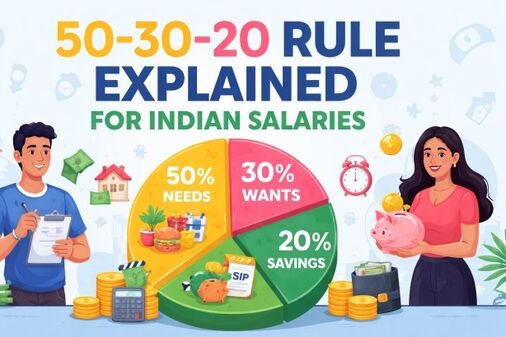
The 50 30 20 rule India is a budgeting formula that divides your monthly income into three categories:
-
50% for Needs
-
30% for Wants
-
20% for Savings and Investments
This rule ensures that your money is balanced between essential expenses, lifestyle enjoyment, and future security. For Indian households, this method works well because it is flexible and easy to adapt to different salary levels.
How the 50-30-20 Rule Works for Indian Salaries
Let’s understand the 50 30 20 rule India with an example.
If your monthly salary is ₹50,000:
-
50% (₹25,000) → Needs
-
30% (₹15,000) → Wants
-
20% (₹10,000) → Savings
This structure makes it easier to track spending and prevents unnecessary financial stress.
50% Category: Needs (Essential Expenses)
Under the 50 30 20 rule India, needs are expenses you cannot avoid. These include:
-
House rent or home loan EMI
-
Electricity, water, and mobile bills
-
Groceries and daily essentials
-
School fees
-
Transportation costs
-
Insurance premiums
In India, rent and EMIs often take a large portion of income, so adjusting within this 50% limit helps maintain financial stability.
30% Category: Wants (Lifestyle Expenses)
The wants category in the 50 30 20 rule India includes non-essential but enjoyable expenses such as:
-
Dining out and food delivery
-
OTT subscriptions
-
Shopping for branded clothes
-
Travel and weekend trips
-
Entertainment and hobbies
This category allows you to enjoy life without guilt, as long as spending stays within limits.
Read For more Blog – reduce monthly expenses
20% Category: Savings and Investments
Savings are the most important part of the 50 30 20 rule India. This 20% should go toward:
-
Emergency fund
-
Mutual funds (SIP)
-
Fixed deposits
-
Public Provident Fund (PPF)
-
National Pension System (NPS)
-
Stock market investments
For Indian salaried employees, consistently saving 20% can lead to long-term wealth creation and financial independence.
Why the 50-30-20 Rule Is Ideal for Indians
The 50 30 20 rule India works well because:
-
It is easy to understand and follow
-
Suitable for beginners in personal finance
-
Encourages disciplined saving habits
-
Helps avoid overspending
-
Can be customized for Indian income levels
Even if your income is low, following this rule partially can still improve money management.
How to Customize the 50-30-20 Rule in India
Due to high living costs in metro cities, some Indians may need adjustments:
-
Use 60-30-10 if rent is high
-
Start with 10–15% savings and increase gradually
-
Reduce wants during financial emergencies
The flexibility of the 50 30 20 rule India makes it practical for real-life situations.
Common Mistakes to Avoid
-
Ignoring savings completely
-
Spending more than 30% on wants
-
Not tracking expenses monthly
-
Forgetting inflation while budgeting
Avoiding these mistakes will help you get the best results from the 50 30 20 rule India.
Frequently Asked Questions
1. Is the 50-30-20 rule suitable for Indian salaries?
Yes, the 50 30 20 rule India is suitable for most Indian salaried individuals and can be adjusted based on income and expenses.
2. Can low-income earners follow the 50-30-20 rule?
Low-income earners can start by saving even 10% and slowly move toward the ideal 50 30 20 rule India structure.
3. Does the 50-30-20 rule include investments?
Yes, the 20% savings portion includes investments like mutual funds, PPF, and NPS under the 50 30 20 rule India.
4. What if my rent exceeds 50% of income?
You can temporarily modify the rule to 60-30-10 and work on increasing income or reducing costs.
5. Is the 50-30-20 rule good for long-term financial planning?
Absolutely. The 50 30 20 rule India promotes disciplined saving and long-term wealth creation.
6. Should I follow the rule strictly every month?
It’s ideal to follow it consistently, but occasional adjustments are fine depending on emergencies or special expenses.
1 thought on “50-30-20 Rule Explained for Indian Salaries”