
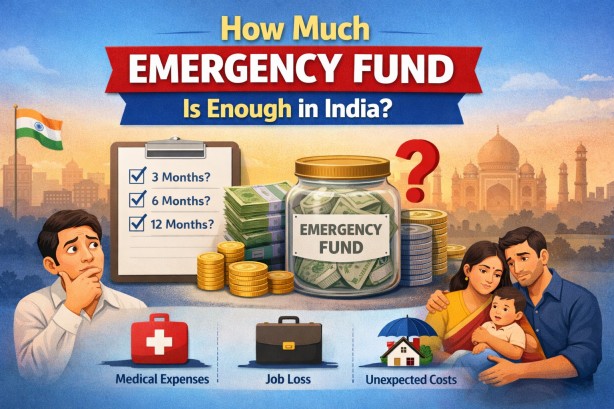
In today’s uncertain world, one question every Indian should ask is how much emergency fund is enough to stay financially safe. Medical emergencies, job loss, sudden repairs, or family responsibilities can arise anytime. Without an emergency fund, even a small crisis can push you into debt.
This guide explains exactly how much emergency fund is enough in India, how to calculate it, where to keep it, and how to build it step by step.
What Is an Emergency Fund?
An emergency fund is money set aside specifically for unexpected expenses. This fund is not for shopping, vacations, or investments. It acts as a financial cushion when life throws surprises.
Common Emergencies in India
-
Job loss or salary delay
-
Medical emergencies
-
Home or vehicle repairs
-
Family responsibilities
-
Sudden relocation or income disruption
How Much Emergency Fund Is Enough in India?
The most common rule says you should save 3 to 6 months of essential expenses. However, in India, this amount can vary based on lifestyle, income stability, and family size.
General Emergency Fund Rule
-
Single person (stable job): 3–4 months of expenses
-
Married with dependents: 6 months of expenses
-
Freelancers/business owners: 6–12 months of expenses
So, when asking how much emergency fund is enough, the answer depends on your personal situation.
How to Calculate Emergency Fund Amount (Step-by-Step)
Step 1: List Monthly Essential Expenses
Include only unavoidable costs:
-
Rent or home EMI
-
Groceries
-
Electricity, water, gas
-
Mobile & internet
-
School fees
-
Insurance premiums
-
Transport
❌ Exclude entertainment, shopping, and travel.
Step 2: Multiply by Required Months
If your monthly essential expense is ₹30,000:
-
3 months = ₹90,000
-
6 months = ₹1,80,000
This is your ideal emergency fund amount.
Emergency Fund Amount Examples (India)
| Monthly Expense | 3 Months | 6 Months |
|---|---|---|
| ₹20,000 | ₹60,000 | ₹1,20,000 |
| ₹30,000 | ₹90,000 | ₹1,80,000 |
| ₹50,000 | ₹1,50,000 | ₹3,00,000 |
This table helps clearly understand how much emergency fund is enough for different income levels.
Where Should You Keep Your Emergency Fund?
Emergency funds should be safe, liquid, and easily accessible.
Best Places to Park Emergency Fund
-
Savings account
-
Liquid mutual funds
-
Sweep-in fixed deposits
Avoid These Options
-
Stocks or equity mutual funds
-
Crypto or high-risk assets
-
Long-term FDs with penalties
Liquidity matters more than returns for emergency money.
Read For more Blog – best money habits to build wealth
How to Build an Emergency Fund Faster
1. Start Small but Start Now
Even ₹1,000–₹2,000 per month is enough to begin.
2. Automate Savings
Set an auto-transfer after salary credit.
3. Use Bonuses & Extra Income
Tax refunds, incentives, or side income should go directly into emergency savings.
4. Cut Unnecessary Expenses
Reduce food delivery, subscriptions, and impulse purchases.
Emergency Fund vs Insurance: Do You Need Both?
Yes, absolutely.
-
Insurance covers major risks (health, life)
-
Emergency fund covers immediate cash needs
Even with health insurance, hospitals often require upfront payments. That’s why knowing how much emergency fund is enough remains crucial.
Common Mistakes to Avoid
-
Using the emergency fund for lifestyle expenses
-
Investing emergency money in risky assets
-
Not adjusting fund size after salary increase
-
Ignoring inflation and family changes
Review your emergency fund every year.
Reading finance blogs like myfinancemoney.com regularly can help improve money management skills.
When Should You Increase Your Emergency Fund?
You should increase your fund if:
-
Your income increases
-
You get married
-
You have children
-
You switch to freelancing or business
-
Your monthly expenses rise
Emergency planning is not a one-time event—it’s ongoing.
FAQs – How much emergency fund is enough
1. How much emergency fund is enough for a salaried person in India?
For a salaried person in India, an emergency fund of 3 to 6 months of essential expenses is usually enough. If your job is stable, 3–4 months may work, but if you have dependents, aim for 6 months.
2. Is a 3-month emergency fund enough in India?
A 3-month emergency fund can be enough only if you have a stable income, low expenses, and good insurance coverage. For most Indian families, a 6-month emergency fund is considered safer due to uncertainties related to medical expenses and job security.
3. Where should I keep my emergency fund for easy access?
You should keep your emergency fund in safe and liquid options, such as:
-
Savings account
-
Sweep-in fixed deposit
-
Liquid mutual funds
Avoid locking emergency money in long-term or risky investments.
4. Should an emergency fund be invested or kept in cash?
An emergency fund should not be invested in risky assets like stocks or crypto. It should be kept in low-risk and easily accessible instruments where you can withdraw money anytime without loss.
5. How long does it take to build an emergency fund?
The time depends on your income and savings ability. If you save 10–20% of your monthly income, you can build a basic emergency fund in 6 to 12 months. Consistency is more important than speed.
6. Do I still need an emergency fund if I have insurance?
Yes. Insurance does not cover all expenses immediately. Hospitals often require upfront payments, and insurance claims take time. An emergency fund helps manage instant cash needs, even if you have insurance.
1 thought on “How Much Emergency Fund Is Enough in India?”